

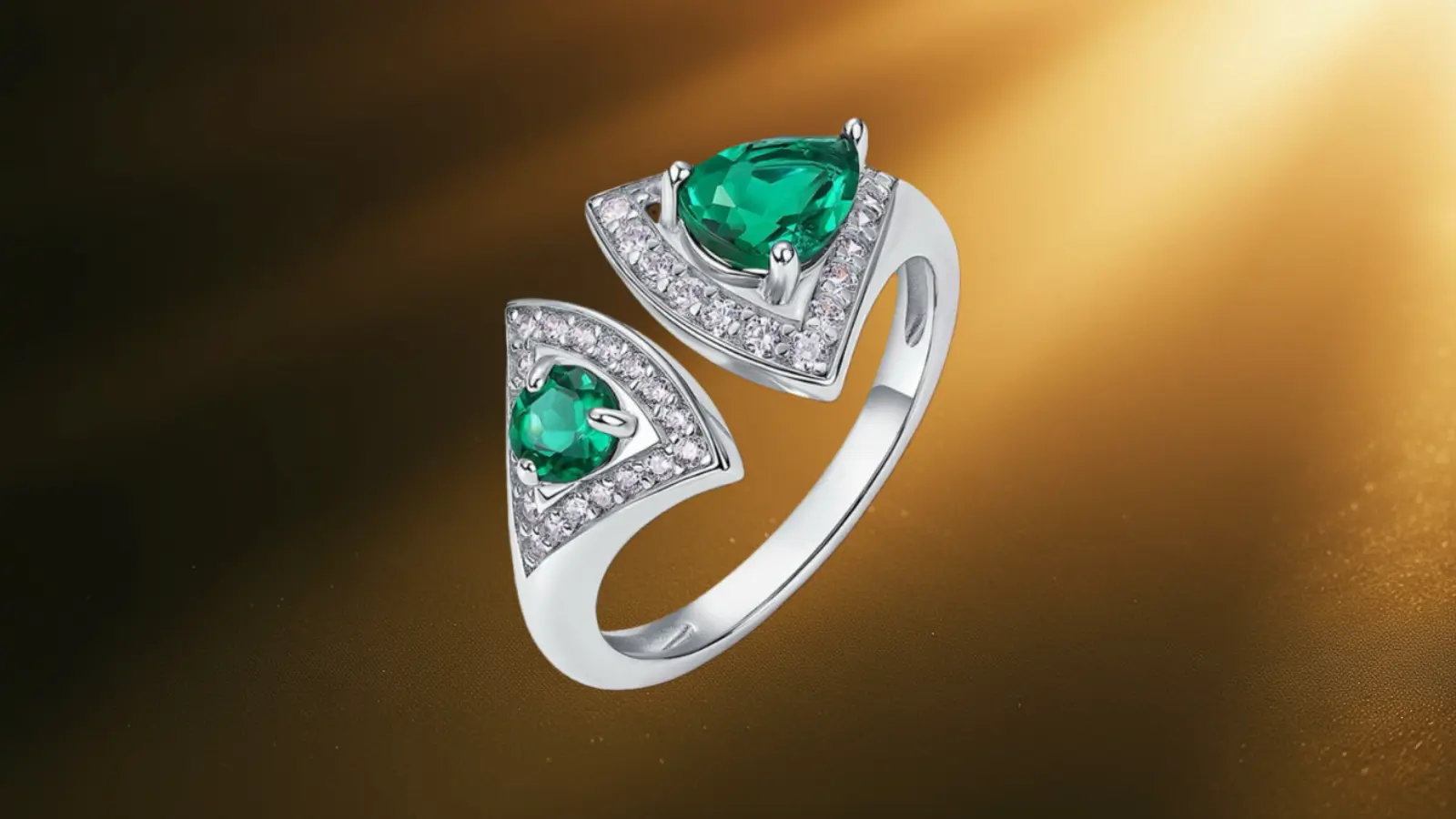


A cloudy or white-looking moissanite is a reason to check the surface, lighting and condition of the whole piece. Appearance alone cannot establish what has changed, and it cannot confirm the identity of the stone.

Start with what you can observe without tools or chemicals. Has the look changed recently? Is the dullness visible in ordinary daylight as well as under a lamp? Does it affect the surface, one area of the stone or the whole piece? Those details are useful when you speak to a jeweller.
Check the viewing conditions first
Compare the jewellery in indirect daylight and in your usual room lighting, against a plain background. Avoid looking only at a phone photograph or a close-up lit by a torch. The camera, reflections and the surrounding colours can change how you perceive the image.
Use the same angle when comparing before and after. If you send photographs to a seller, include an overall view, a closer view of the area that concerns you and a short moving video. These can explain the problem, although they do not replace an in-person examination.
Look for surface residue without scraping
Jewellery can collect traces of everyday products and handling. A film on a stone and damage to a stone are different issues, so do not assume one from the other. GIA’s jewellery-cleaning guidance describes a soft cloth as a gentle starting point for removing surface dust and oils.
Before wiping, check that the piece appears intact. Use a clean, soft, non-abrasive cloth and light pressure on accessible surfaces. Do not pick around the stone with a pin or force a cloth under a claw. If anything moves or catches, stop and have the setting checked.
Match any further cleaning to the complete piece
The stone is only one component. Plating, other gems, the setting and any existing damage affect what is suitable. Advice for a loose moissanite should not automatically become cleaning instructions for a plated ring or a necklace with several materials.
For instance, the Round Moissanite Solitaire Necklace is listed in sterling silver and yellow gold-plated sterling silver variants. Check the variant you own before choosing a method. Do not use silver dip or an abrasive silver-polishing product on a gold-plated surface merely because silver is underneath.
Keep away from toothpaste, scouring powders, improvised acid mixtures and unsupported social-media remedies. Do not put the piece in an ultrasonic cleaner just because the stone is described as hard. GIA explains that treatments and setting condition can make ultrasonic cleaning unsuitable.
When should you ask a jeweller?
| What you notice | Useful next step |
|---|---|
| A new dull appearance after using a cosmetic or cleaning product | Explain what contacted the piece and ask for a finish-appropriate method. |
| A visible line, rough area or missing section | Avoid scraping or stronger cleaning; request an examination. |
| A loose stone, movement or a new snag | Stop wearing it until the setting is checked. |
| Little improvement after gentle wiping | Ask for professional assessment rather than repeatedly increasing cleaning strength. |
Will cleaning always restore the appearance?
No cleaning method can promise that without knowing the cause. Surface residue may be removable, while damage, a setting issue or a question about stone identity needs a different response. A photograph cannot reliably distinguish all of those possibilities.
Use the Minerva care guide alongside the details for your exact piece. If you are unsure, contact Minerva with the product name, when the change appeared and clear photographs. Keep the item and any supplied paperwork available for an inspection.