


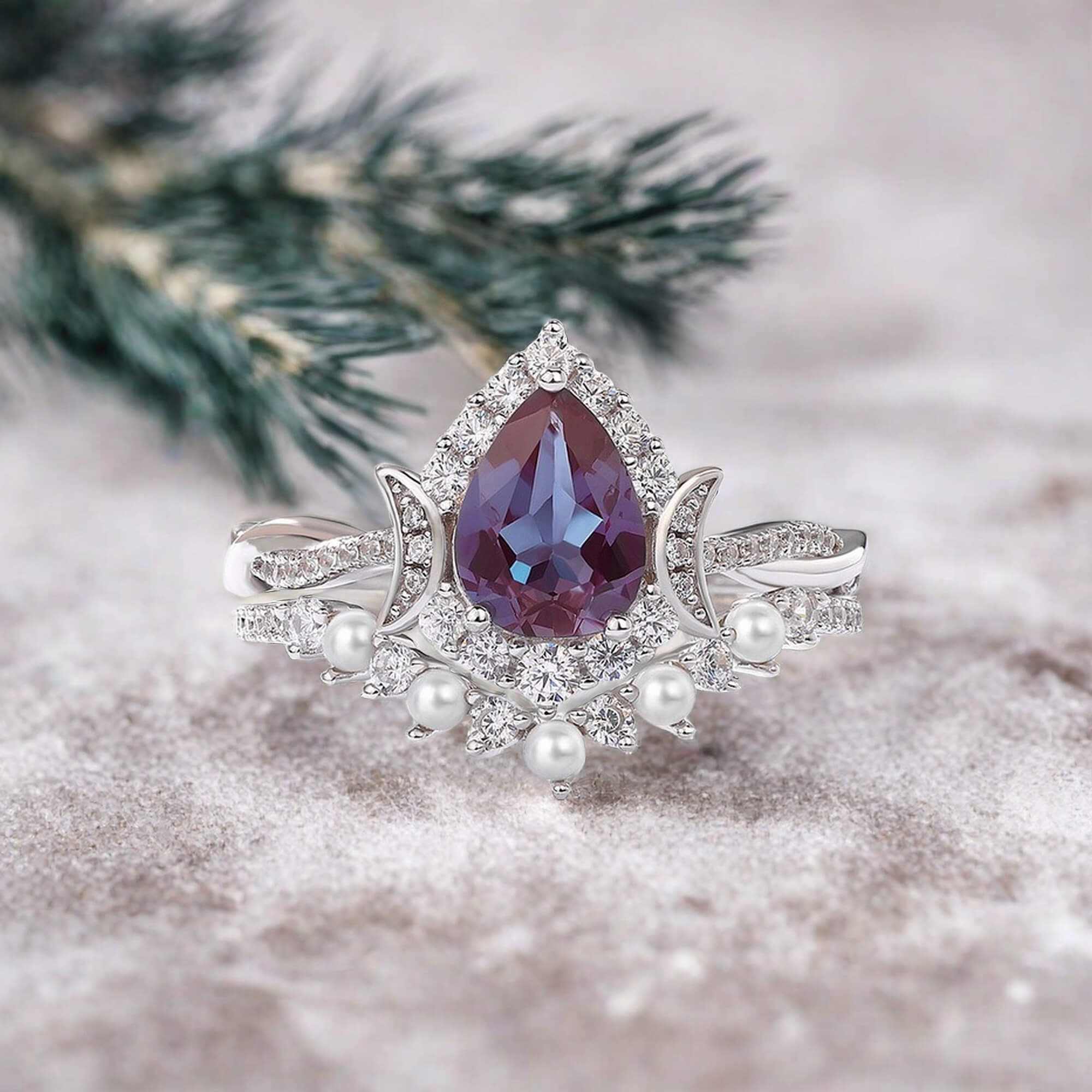


Start by checking the light sources. Alexandrite's colour change responds to a change in illumination; tilting it under the same lamp is a different test. A product video also passes through a camera and screen, so its colours may not match what you see at home.
A subtle change does not, by itself, identify a stone or prove a fault. If the result is far from the agreed description, ask the seller for the light conditions and the identity of the actual stone supplied.

Change the light, then compare
GIA describes alexandrite as a colour-change variety of chrysoberyl, with different appearances under daylight and incandescent illumination. The exact strength and colours vary. Turning a stone in one light can also show directional colour differences, but that is not the same question as changing the light source.
Compare indirect daylight with a suitable warm indoor light, keeping the background simple. A warm-labelled LED does not necessarily reproduce an incandescent source's spectrum. Ask which lights were used in the seller's demonstration rather than expecting every lamp to give an identical result.
Remove the camera as a source of confusion
Look directly at the piece as well as through a phone. Automatic white balance, exposure and screen colour settings can alter the recorded result. Ask for an unfiltered clip that names the two light sources and shows the transition without a colour-editing effect.
If an exact hue is important, obtain a written description and discuss what variation is expected before ordering. A vivid promotional frame is not a measured guarantee for every light in your home.
Confirm natural, lab-grown or imitation
The Rectangular Alexandrite Three-Stone Ring identifies its centre as lab-grown alexandrite, with 1 ct or 2 ct options and 10K or 14K yellow gold variants. Our Alexandrite Stud Earrings also list lab-grown centres.
These are not described here as mined alexandrite. Nor does a colour-changing appearance alone prove that an unknown stone is alexandrite. If identity needs independent confirmation, discuss an appropriate gemmological assessment; a phone-light experiment cannot replace it.
What to send in an enquiry
- The product and variant ordered.
- The description or video you used when deciding.
- The lighting used for your comparison.
- Unfiltered photographs or a short clip, clearly marked as camera views.
- The particular difference you want explained.
Do not heat the stone or try chemicals to force a colour change. For choosing a different design, browse the alexandrite collection and confirm each listing's stone identity. Our value guide explains why that identity belongs beside metal and dimensions in a comparison.